A Connected Future: The Challenges and Solutions
The EV charging ecosystem is at a crossroads. As EV market penetration increases, users increasingly face obstacles such as unavailable chargers, inefficient resource use, and grid instability. Charging station operators grapple with customer behavioral actions and sub-optimal utilization, while grid operators are strained by unbalanced demand surges. Together, these challenges hinder progress in electrification.
With the rise of AI, there is a path forward – one where stakeholders collaborate to transform the EV ecosystem into a seamless, inter-operable, and efficient network.
Imagine an EV user, who took her family for a long-awaited road trip but had to take an unplanned halt in finding an available charger nearby. Now, consider a station operator losing revenue because some of their charging point spots are occupied by idle vehicles for parking (or “hogging”). Meanwhile, a grid operator struggles to stabilize energy distribution amidst unpredictable demand in electricity. These interconnected issues highlight the need for innovative and even disruptive solutions.
Unlocking Possibilities with AI
AI technologies bridge these gaps. We at NexTurn aim for DAIS (Data-driven AI solutions) framework, a suite of solutions for the EV sector.
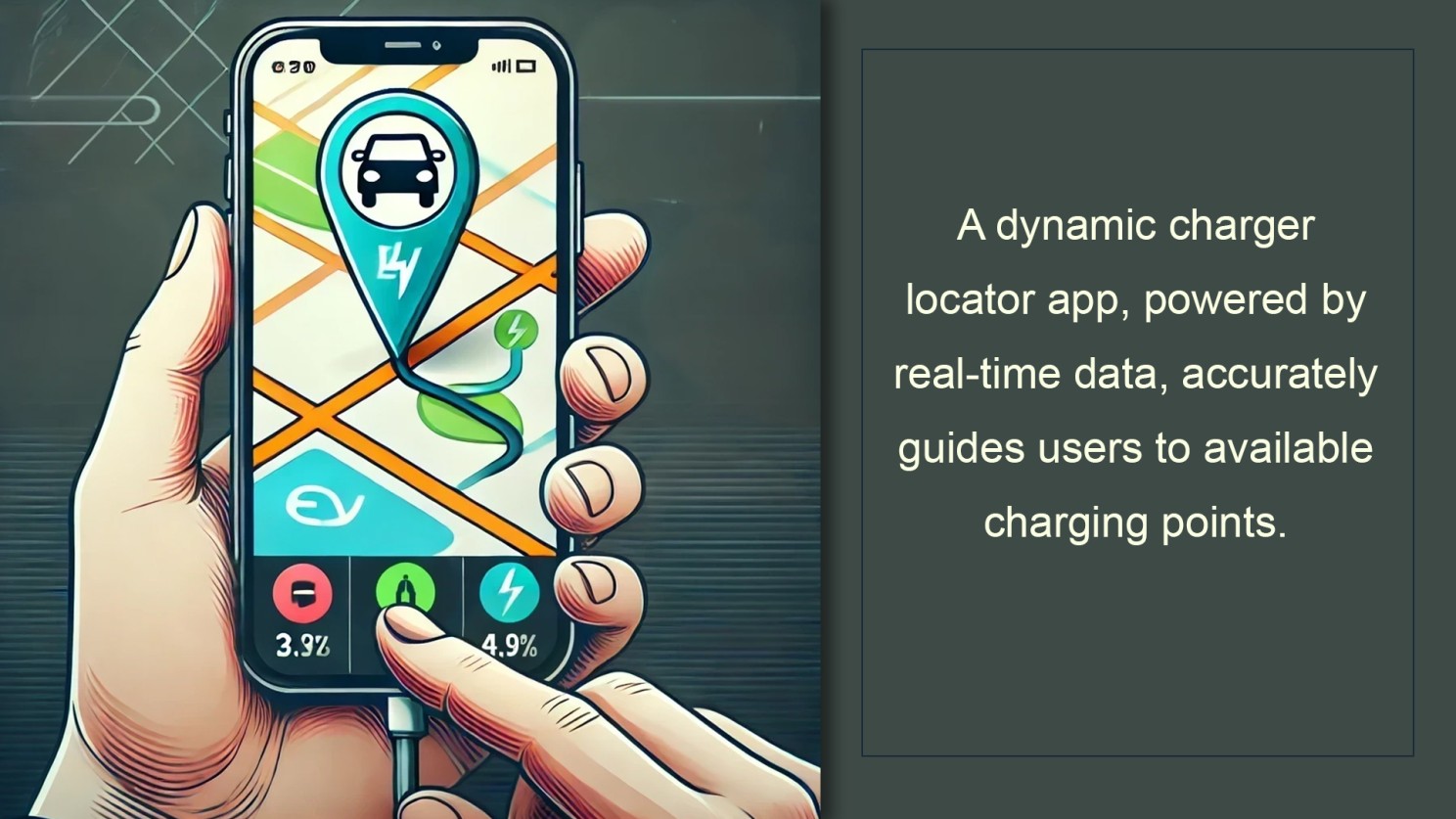
Such app can also highlight locations of green energy-powered stations thereby transforming frustration into trust while promoting sustainability.
Unlike conventional engine vehicles, EVs can be equipped with different port types which correspondingly require a specific cable type from the charging station.
The locator app should incorporate charging compatibility verification (port type, power spec, etc.) while finding the right charger.
Studies show that it is not recommended to charge an EV battery more than 80% to avoid battery strain and eventual decline in battery life
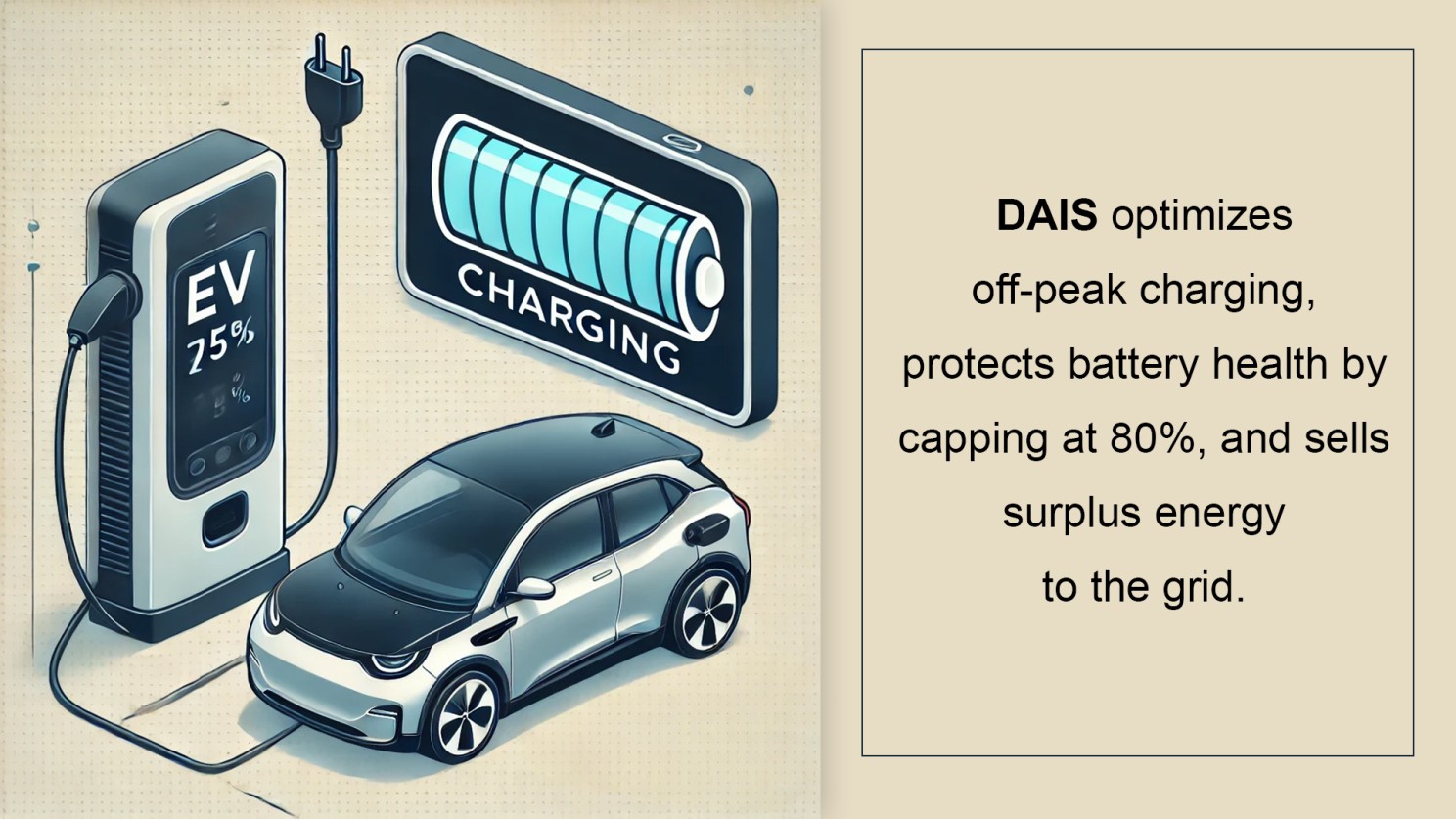
For residential users, it automates charging start time, overnight energy transfers, turning EVs into revenue-generating assets while supporting sustainability and reducing costs. The latter will be in tandem with the V2G (vehicle-to-grid) technology.
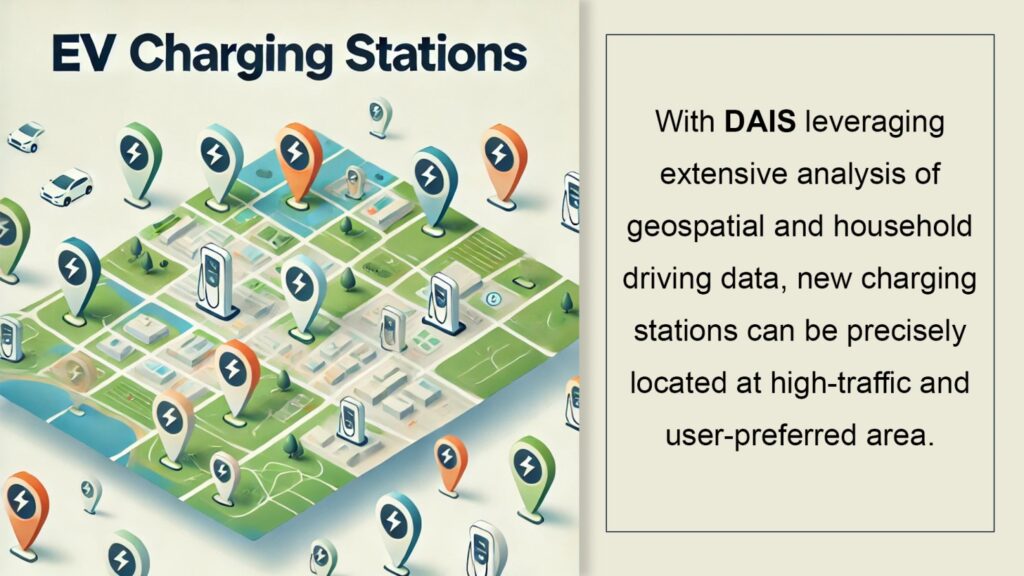
EV users usually express concern in taking long detours off their usual routes for charging their vehicles. DAIS for new infra planning leverages data analytics and make recommendations on most suitable location for charging station. DAIS for new infra planning also aims for strong network connectivity system proposals as EV users express concern on payment issues due to poor cellular network.
For charging station operators, DAIS derived from behavioral analytics not only detect misuse but also incentivize fair usage with user alerts, smart billing policies, enhancing turnover and revenue. These strategies not only solve immediate challenges but also create a foundation for long-term scalability.
[1] European Commission: https://alternative-fuels-observatory.ec.europa.eu/general-information/recharging-systems
[2]Qmerit: https://qmerit.com/blog/why-you-shouldnt-fully-charge-your-ev/
Stakeholders at the Centre
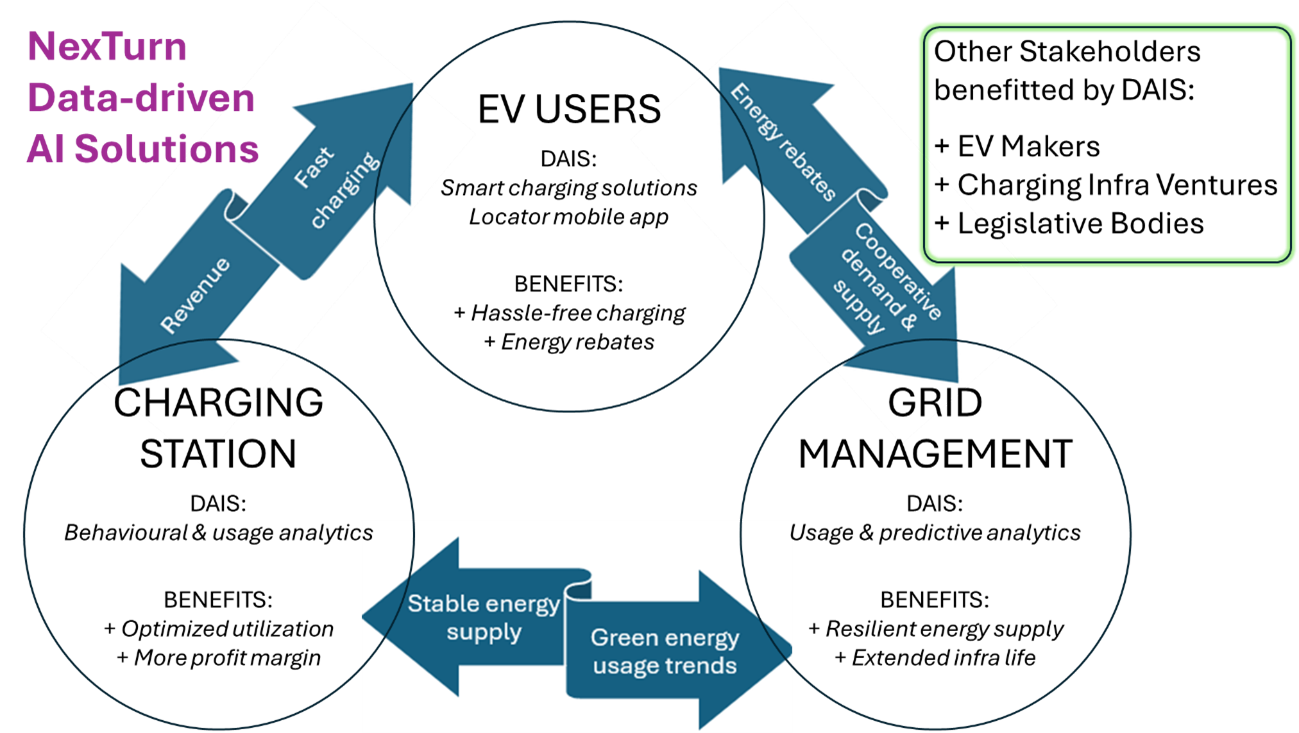
Each stakeholder stands to gain from the DAIS enabled transformation. EV users get the luxury of instantaneously finding vacancy status of the right charging spot. For residential use, monetary incentives can be availed with the V2G architecture. Charging station operators benefit from optimized utilization, growing both profitability and user loyalty. Grid operators achieve cost efficiency and operational resilience. The latter aspect can be transformative, enabling grid utilization in areas currently plagued by frequent power outages, particularly in underdeveloped and developing countries.
Vehicle manufacturers witness increased adoption of EV as the mainstream mobility sector tagged along with enhanced confidence in their decision to switch to electric. Power generation entities as well as the supporting government agencies can understand the preference of consumers on green energy and standardize regulatory policies.
The ecosystem’s success relies on collaboration. From data-sharing frameworks to co-developed AI systems, stakeholders must align their strategies for collective progress.
Conclusion: Building a Sustainable Ecosystem
This is more than an operational upgrade; we strongly believe that it is going to be a historical movement towards a smarter, greener future. Fueled by the potential of AI, the DAIS concepts from NexTurn aim to evolve the EV charging ecosystem into a fully interconnected sector, where every stakeholder stands to thrive. The DAIS can also become a key enabler in meeting the international requirements set towards reaching carbon neutrality targets for the year 2050 and beyond.
Together, we can electrify our vehicles today and pave the way for a cleaner and sustainable tomorrow.